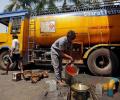
After a spike in crude oil and gas prices in October following the Hamas terror attack, prices eased down 9 per cent month-on-month in November. The Organization of the Petroleum Exporting Countries (Opec) and Opec+ agreed to a further voluntary production cut in January-March 2024 to try and support global crude prices. The best guess here is that crude prices (currently at $75/barrel, or bbl) will not likely cross significantly above $80, and gas prices are also likely to remain subdued unless there's a further escalation in the Israel-Hamas conflict.

Indian imports of Russian crude oil may stabilise or even decline in 2024 from record 2023 levels amid shrinking discounts, lower output, and a rebound in West Asian supplies, according to the ship-tracking data and industry executives. This may impact the billions of dollars in annual savings that India made last year. Imports of Russian oil jumped by a record 140 per cent in calendar 2023 to 1.79 million barrels a day (b/d) from 740,400 b/d in 2022, when Russia marched into Ukraine in February, and from just 102,000 b/d in 2021, according to the data from Paris-based market intelligence agency Kpler.

The Organization of the Petroleum Exporting Countries (Opec) and its partners, such as Russia, collectively termed Opec+, have decided to cut crude oil production by 100,000 barrels per day (bpd) from October onwards, at a meeting on Monday. In a step that may increase prices in India, the group has decided to reduce output quotas for October, after a fall in global oil demand outlook. The cut in output is equal to 0.1 per cent of global supply.

India imports about 25 million tonnes of oil from Iraq each year.
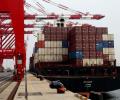
Economic recovery from the pandemic in the US has helped India achieve the $400-billion mark for exports for the first time in any fiscal year. According to the preliminary data compiled by the Department of Commerce, India exported goods worth $73 billion to the US from April 1 to March 21 - up 47 per cent, compared to last year. The US' share of exports, compared to total exports, stood at 18.2 per cent. The country is also India's largest trading partner and export destination.

Of Trump's reciprocal tariffs and trade deals

The Organization of Petroleum Exporting Countries (OPEC) in its latest monthly oil market report projected the world's third-biggest energy consumer to add 0.39 million barrels per day (bpd) of crude oil demand in 2022. India's oil demand rose from 4.51 million barrels per day in 2020 to 4.76 million bpd in 2021, recording a 5.61 per cent growth.

'As the markets are expected to remain jittery in the near term, we advise investors to use this opportunity to enter quality largecaps from a long-term perspective.'
Oil prices dipped on Wednesday as the market prepared for a gradual increase of Iranian exports into an already oversupplied market from 2016.
Imports rise at highest pace in more than 2 years as crude oil price spikes.
India's crude oil imports are coming in from a changing mix of countries, with the top three accounting for around 60 per cent of total imports. Russia emerged as the largest source of crude oil imports for India in June, as per the latest available data from the Organization of the Petroleum Exporting Countries (OPEC). The data which is released with a lag, showed that Russian imports accounted for 24 per cent of the total crude imports into the country.

Price of non-subsidised cooking gas (LPG) was today cut by Rs 43.50 per cylinder as international oil rates slumped to their lowest since May 2009.

Oil producers cartel OPEC's share in India's oil imports fell to an all-time low of 46 per cent in April as purchases of cheaper Russian oil peaked, industry data showed. Organization of the Petroleum Exporting Countries (OPEC) nations, mainly in the Middle East and Africa, had a 72 per cent share of all crude oil India imported in April 2022. This share slid to 46 per cent in April 2023, according to energy cargo tracker Vortexa.

The importance of China as India's top trading partner cannot be understated.
It's the sovereign right of the Organization of Petroleum Exporting Countries to decide on the oil production capacities, Union Minister of Petroleum and Natural Gas Hardeep Singh Puri said Friday. Refraining from commenting on the controversial decision of OPEC on cutting oil production by two million barrels a day, which has taken the world by surprise, Puri said it is likely to be scrutinized very carefully. During an interaction with a group of Indian reporters, he said that India as one of the major consumers of oil and gas also has a major say in the global oil market.

India will soon become a green hydrogen exporting country, the road transport and highways minister told reporters before leaving for Parliament in the car, which is the first of its kind in India.
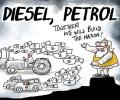
Petrol and diesel prices are unlikely to be increased despite firming raw material costs because of upcoming general elections next year, Moody's Investors Service said. Three state-owned fuel retailers -- Indian Oil Corporation (IOC), Bharat Petroleum Corporation Ltd (BPCL) and Hindustan Petroleum Corporation Ltd (HPCL) -- which control roughly 90 per cent of the market, have kept petrol and diesel prices on freeze for a record 18 months in a row. This is despite the raw material (crude oil) cost surging last year, leading to heavy losses in first half of 2022-23 fiscal year before easing oil prices propelled them to profitability.

The Budget has given signals that India is sensitive to the US needs and willing to walk the extra mile, but if need be, we should respond in equal measure as a sovereign nation, notes Ajay Srivastava.
India's exports during the first week of September jumped 13.35 per cent year-on-year to $ 6.12 billion, official data released on Thursday showed. At the same time, imports declined by 21.37 per cent to $ 6.85 billion. Consequently, the deficit during September 1 to 7 worked out to $ 730 million.

Jet fuel (ATF) rates were on slashed by a steep 12.5 per cent, the sixth straight reduction in prices since August, as international oil prices slumped to five-year low levels.

Margins for the oil refining and retailing sector have moved off their peaks, and the average integrated margins (refining plus marketing) for oil marketing companies (OMCs) have normalised. The ascent in crude oil prices, combined with static retail prices, has depressed marketing margins for diesel and petrol. However, the fall in marketing margins has been offset by increased gross refining margins (GRMs).
India has taken up the issue of high oil prices with producer nations and OPEC, demanding affordable rates, Minister of State for Petroleum and Natural Gas Rameswar Teli told the Lok Sabha on Monday. Petrol and diesel prices have shot up to record highs across the country after relentless price increases since early May. Petrol is retailing above Rs 100 a litre in more than a dozen states.

Major General S C N Jatar, who passed into the ages on Monday night, thwarted anti-national forces at the peak of the Assam agitation. Colonel Anil A Athale (retd) salutes this officer and gentleman.

India is estimated to spend $1.36 billion more a year for every one dollar a barrel increase in crude oil prices, says Subhayan Chakraborty.

'Data-dependence means you can raise or drop rates. The present stance is only for raising rates.'
There is positive correlation between crude oil prices and Indian equities and investors can expect more upside after the recent rally in Brent crude price.

Russia dominated Saudi Arabia in oil supplies as the world's fastest-growing major economy for fossil fuels in October, relegating the Kingdom to third place. Iraq was India's top oil supplier, according to the data from Vortexa. Saudi Arabia's decline in India's oil market has coincided with Russia's rise, and ironically occurred amid growing diplomatic ties between Riyadh and New Delhi. Saudi Crown Prince Mohammed bin Salman Al Saud is visiting India this month to meet Prime Minister Narendra Modi.

Removal of this status means India can now enhance customs duties to any level on goods coming from Pakistan.

oil market remained under pressure and big gains are unlikely.
Prices are sustainable and not just driven by speculative gains

The declining exports would have implications for the job market.

India, the world's third-biggest oil consumer, has conveyed to OPEC countries its concern over high oil prices that are threatening to impact the nascent economic recovery after the devastating pandemic. New Oil Minister Hardeep Singh Puri has made phone calls to key OPEC nations to convey the desire for an affordable price for consumers. After calling his counterparts in Qatar and the UAE, he called Organization of the Petroleum Exporting Countries (OPEC) kingpin Saudi Arabia on Thursday evening.
Rising production from OPEC as well as the US also weighing on prices
Aramco Trading Co, a subsidiary of state oil giant Saudi Aramco, offered 2.8 million barrels of ultra low sulphur diesel for loading in late July to early August

The shift comes as the gap between the international benchmark Brent and the Middle East price marker narrows
Oil fell below $59 a barrel for the first time since May 2009 on Tuesday, extending a six-month selloff as slowing Chinese factory activity and weakening emerging-market currencies added to concerns about demand.
Oil prices jumped nearly $3 a barrel and gold and safe-haven bonds rallied on Friday after the killing of top Iranian commander Qassem Soleimani in an airstrike by the US in Baghdad.
In spite of an overall healthy rise in exports, there are many traditional sectors which used to be the mainstay of India's exports in the past, but are now suffering from significant weaknesses, says A K Bhattacharya.
Though the government has been pushing for exports of high-value manufactured goods across major markets in place of raw materials and input goods, India's top exports to China remain in the raw materials category.
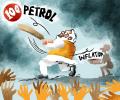
After Rajasthan, Madhya Pradesh and Maharashtra, petrol price has crossed the Rs 100-per-litre mark in Leh, in almost all districts of Andhra Pradesh and parts of Telangana after fuel prices were again hiked on Friday. Petrol price was increased by 27 paise per litre and diesel by 28 paise a litre, according to a price notification of state-owned fuel retailers. The hike - 18th in the last one month - took fuel prices across the country to a historic high. In Delhi, petrol hit an all-time high of Rs 94.76 a litre, while diesel is now priced at Rs 85.66 per litre.
